Blog
Water-Activated Flood Barriers vs Sandbags: A Faster, Cleaner Way to Stop Flooding
Water-activated flood barriers expand in minutes to block floodwater — no sand, no heavy lifting, no mess. See how they compare with sandbags and when to use them.
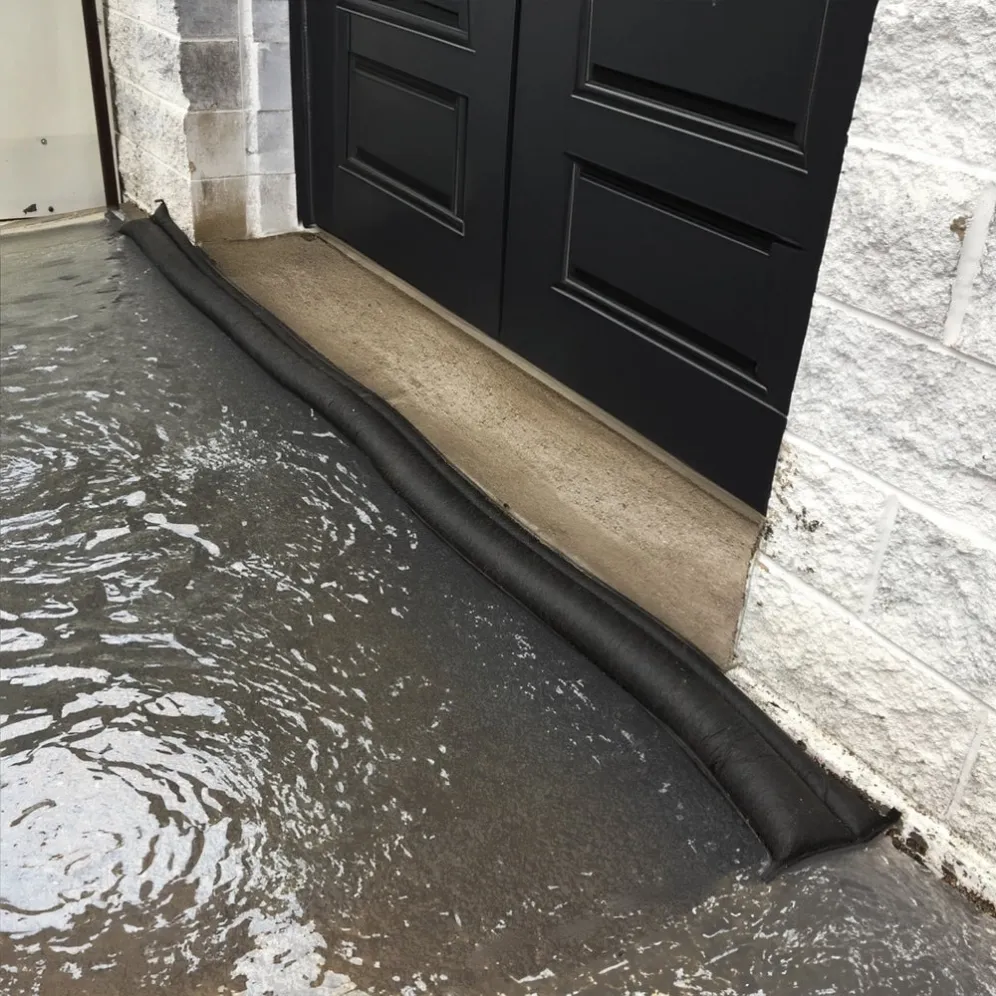
Flooding rarely gives much warning. When water starts rising toward a doorway, a garage or a warehouse entrance, the traditional answer has been the sandbag — but sandbags are slow to prepare, heavy to move and messy to clean up afterwards. Water-activated flood barriers were designed to solve exactly those problems.
What Is a Water-Activated Flood Barrier?
A water-activated flood barrier is a flat, lightweight tube made of non-woven fabric with a super-absorbent polymer core. It is stored vacuum-compressed in a compact bag, so it takes up almost no space on a shelf. When it comes into contact with water, the core absorbs the water and the barrier swells — reaching about 8 cm high in 5–10 minutes — forming a solid dam that blocks and diverts floodwater.
Anwill's Water Active Flood Barrier comes in two sizes, 15 cm × 1.5 m and 15 cm × 3 m, packed in a vacuum-compressed pack. Custom sizes, logo and packaging are available on request.
Flood Barrier vs Sandbags: Side by Side
| Water-activated flood barrier | Sandbags |
|---|---|---|
Weight before use | Light — one person can carry several | A filled sandbag can weigh 15–20 kg |
Preparation | None — take it out of the bag and lay it down | Sand, shovels and labour to fill each bag |
Deployment time | Minutes — water activates it on the spot | Hours for a full row of filled bags |
Storage | Flat vacuum pack, small footprint | Bulky, and filled bags degrade in storage |
Clean-up | Lift away after the water recedes | Wet sand to shovel, bag and dispose of |
Reuse of materials | Reusable — dry it out and use it again for the next flood | Single use |
Sandbags still have their place — they are cheap and available anywhere. But when speed, storage space and clean-up matter, a water-activated barrier is the more practical choice, especially for businesses that need to protect an entrance quickly with limited staff.
Where to Use Them
- Doorways and garage entrances — the most common entry point for floodwater in homes and small businesses
- Warehouse and loading-dock doors — protect stock and equipment with a barrier across a wide opening
- Basement bulkheads and stairwells — lay the barrier in an L-shape around the opening
- Drains and low points — divert water away from a vulnerable area
Because the barrier is a flexible flat tube, it bends around corners and follows the shape of the ground. For a longer run, simply lay two barriers end to end.
How to Deploy in 3 Steps
- Take it out of the vacuum bag. The barrier is flat and light before activation, so one person can carry it to the opening.
- Lay it across the opening, on the water side of the doorway. The water should be on one side and the protected area on the other.
- Let the water activate it — or pre-soak it with a hose. The barrier expands to about 8 cm high in 5–10 minutes and holds the water back.
Choosing the Right Size
- 15 cm × 1.5 m — standard doorways, garages and small openings
- 15 cm × 3 m — wider entrances, warehouse doors and long runs
- Custom sizes — available on request, with custom logo and packaging
If you are not sure which size fits your entrance, measure the width of the opening and add a little extra so the barrier overlaps the frame on both sides.
Request a Quote
Flood season does not wait. Stocking a few water-activated barriers before the rain arrives is far cheaper than cleaning up after a flood. Contact us for a quotation — or email [email protected]. Anwill has manufactured spill control and flood protection products in China since 2009, serving customers in over 40 countries.