Marine Oil Spill
Inflatable Oil Spill Boom
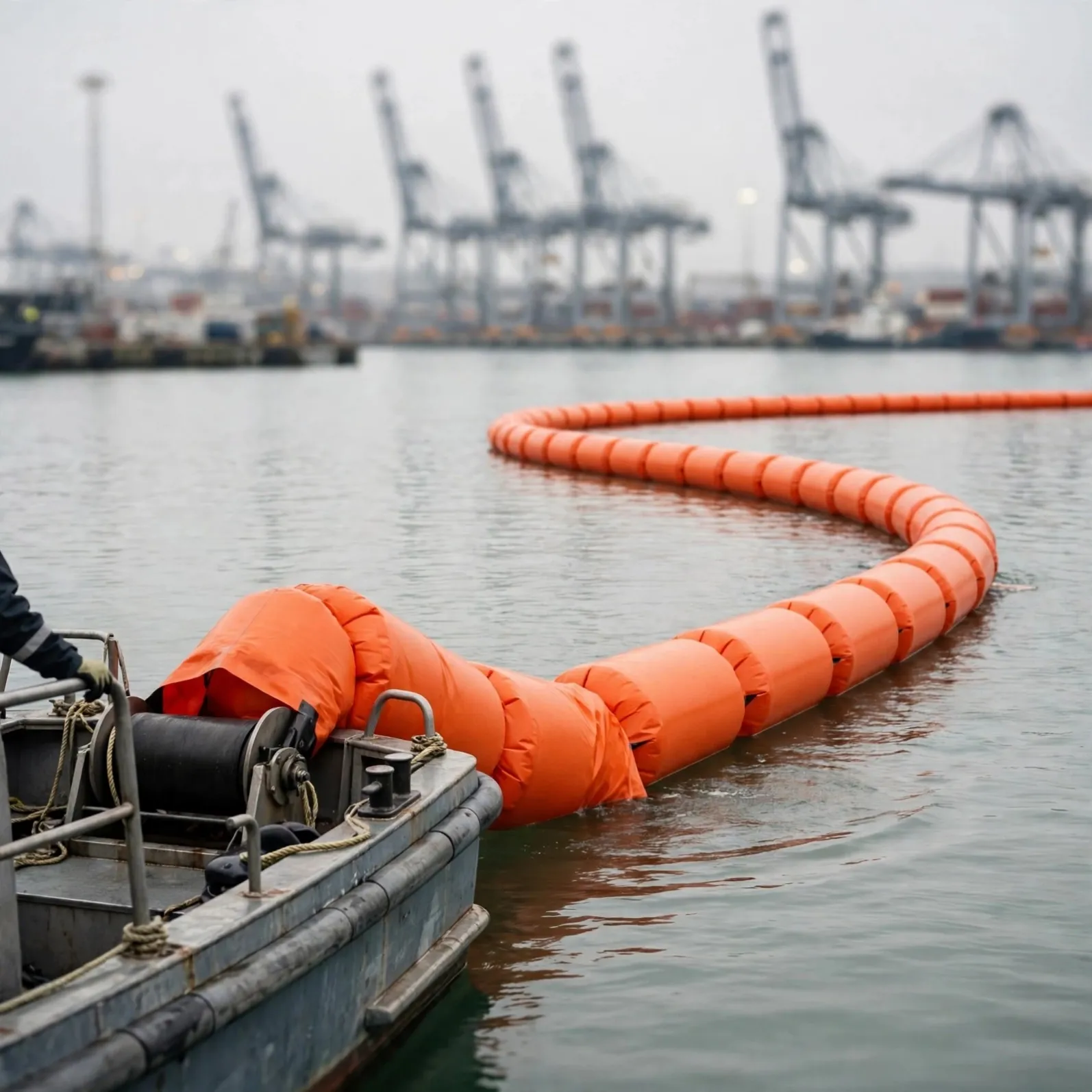
Inflatable oil spill boom for rapid emergency deployment — packs onto a reel, inflates in minutes, total heights from 600 to 1500 mm.
Specifications
- Material
- PVC/PU-coated polyester fabric, 1100 dtex
- Total Height
- 600–1500 mm
- Freeboard
- Approx. 40% of total height
- Draft
- Approx. 60% of total height
- Section Length
- 25 m standard
- Weight
- Approx. 3–8.5 kg/m
- Connector
- ASTM Z connector (ASTM F962)
- Ballast
- Galvanised chain in skirt pocket, 10 or 13 mm
- Air Chambers
- Independent chambers every 3–5 m
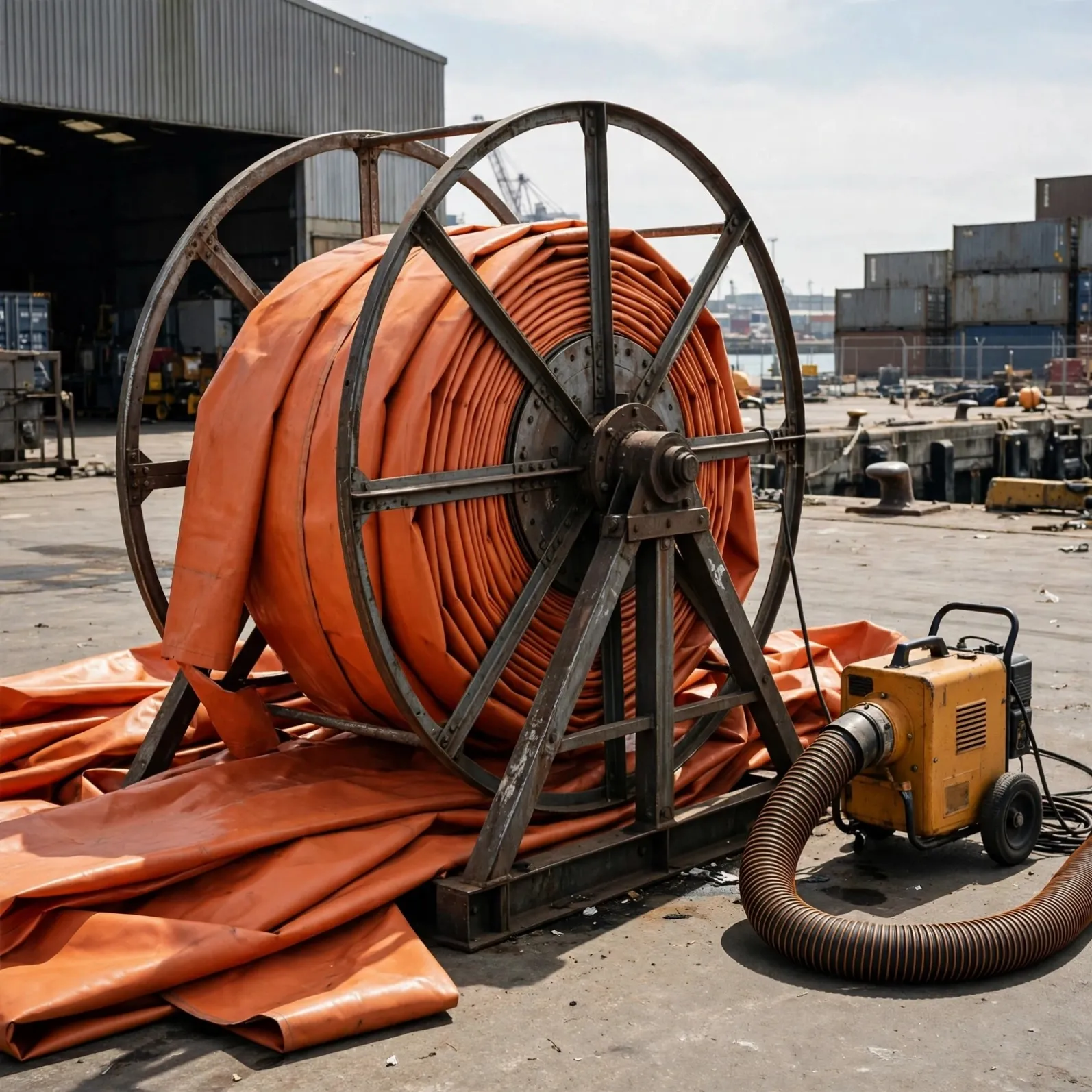
The emergency-response boom: inflatable sections pack down onto a reel or into a container, travel light, and inflate on site in minutes. Total heights from 600 mm for harbour water to 1500 mm for offshore work.
An inflatable boom trades a few minutes with an air blower for the smallest packed volume of any boom type — which is why response teams keep it on reels and in containers, ready to move. Deflated, hundreds of metres ride on one reel; on site, a high-volume blower fills the independent air chambers section by section, and the boom goes straight from the reel into the water.
The air tube is divided into independent chambers roughly every 3–5 m, so one puncture
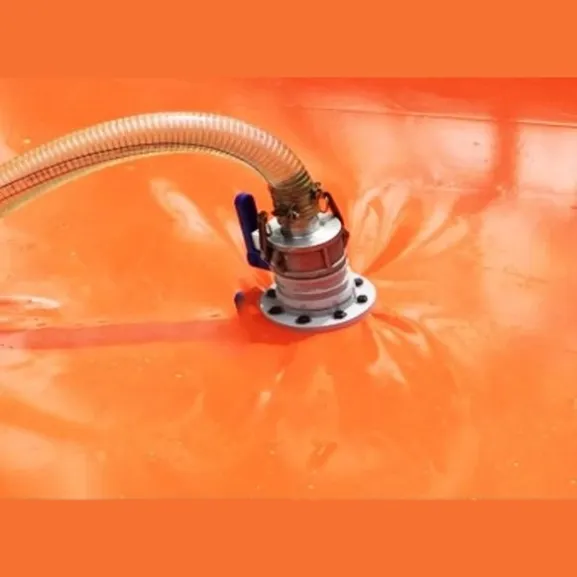
costs one chamber, not the barrier. The chambers are high-frequency welded from PVC- or PU-coated polyester fabric (1100 dtex, around 1000 g/m²), inflated at very low pressure, and fitted with protected valves. Below the tube, the skirt carries a galvanised ballast chain in a pocket, and sections join with ASTM Z connectors — the connector standard used across the industry, so Anwill sections also mate with booms already in your stock.
Inflatable or solid float — which one?
Choose inflatable when the boom is emergency stock: it stores smallest, travels lightest and deploys fastest, and it asks for a blower and puncture care in return. Choose a solid float boom when the barrier stays on the water permanently — solid floats are always ready, cannot deflate, and need almost no attention. Anwill supplies both types: see the PVC Solid Float Oil Spill Boom (WGV Series) for open-water sizes and the Oil Spill Containment Boom (WQV-500C) for sheltered water.
Key Features
- Smallest packed volume — deflated sections store on a reel or in a container; hundreds of metres in one lift
- Fast deployment — high-volume blower inflation, straight from the reel into the water
- Independent air chambers — a puncture takes out one chamber (3–5 m), not the whole barrier
- Industry-standard connection — ASTM Z connectors (to ASTM F962) mate with booms already in your stock
- Heavy coated fabric — PVC/PU-coated polyester, 1100 dtex, around 1000 g/m², high-frequency welded
- Light to handle — roughly 3–8.5 kg per metre across the range
Connector: ASTM Z connector (ASTM F962)
Ballast: Galvanised chain in skirt pocket, 10 or 13 mm
Air Chambers: Independent chambers every 3–5 m
Specifications
Material: PVC/PU-coated polyester fabric, 1100 dtex
Total Height: 600–1500 mm
Freeboard: Approx. 40% of total height
Draft: Approx. 60% of total height
Section Length: 25 m standard
Weight: Approx. 3–8.5 kg/m
Applications
- Emergency response stock — reels and containers held by response teams, ports and harbour authorities
- Oil terminals and refineries — standby boom that deploys around a vessel or berth within minutes
- Offshore support — larger sizes for nearshore and offshore containment
- Mutual-aid and contract stock — compact storage where warehouse space is limited
For oil on land and hard surfaces, see the 120L Oil Spill Kit. For how containment booms work, see Oil Spill Containment Booms — How They Work.
Frequently Asked Questions
How long does inflation take?
The chambers fill at very low pressure with a high-volume blower, section by section as the boom pays out from the reel — deployment is measured in minutes per section, not hours.
What happens if a chamber is punctured?
Only that chamber (3–5 m) loses air; the neighbouring chambers keep the barrier afloat while the section is recovered and repaired.
Which size do I need?
Match total height to the water: 600–900 mm covers harbours and inland water, 1000–1200 mm nearshore work, and up to 1500 mm offshore. Tell us the site and conditions and we will confirm the size and the exact specification for your order.
Can it stay in the water permanently?
It can, but permanent deployment is usually solid float work — no inflation, nothing to puncture. Most operators keep inflatable boom as response stock and solid float boom as the standing barrier.
Does it connect to booms we already own?
Yes — the ASTM Z connector is the industry standard, so sections join to existing stock fitted with the same connector.
Request a Quote
Contact us for a quotation or email [email protected]. Tell us the water conditions and the length you need to cover, and we will confirm the model and full specification.