Hospital Medical Waste Piling Up: Storage and Collection Rules That Keep Inspectors Calm
Medical waste piles up when segregation, storage and collection drift apart. Colour-coded segregation, the 48-hour limit and a daily collection routine keep a hospital audit-ready.
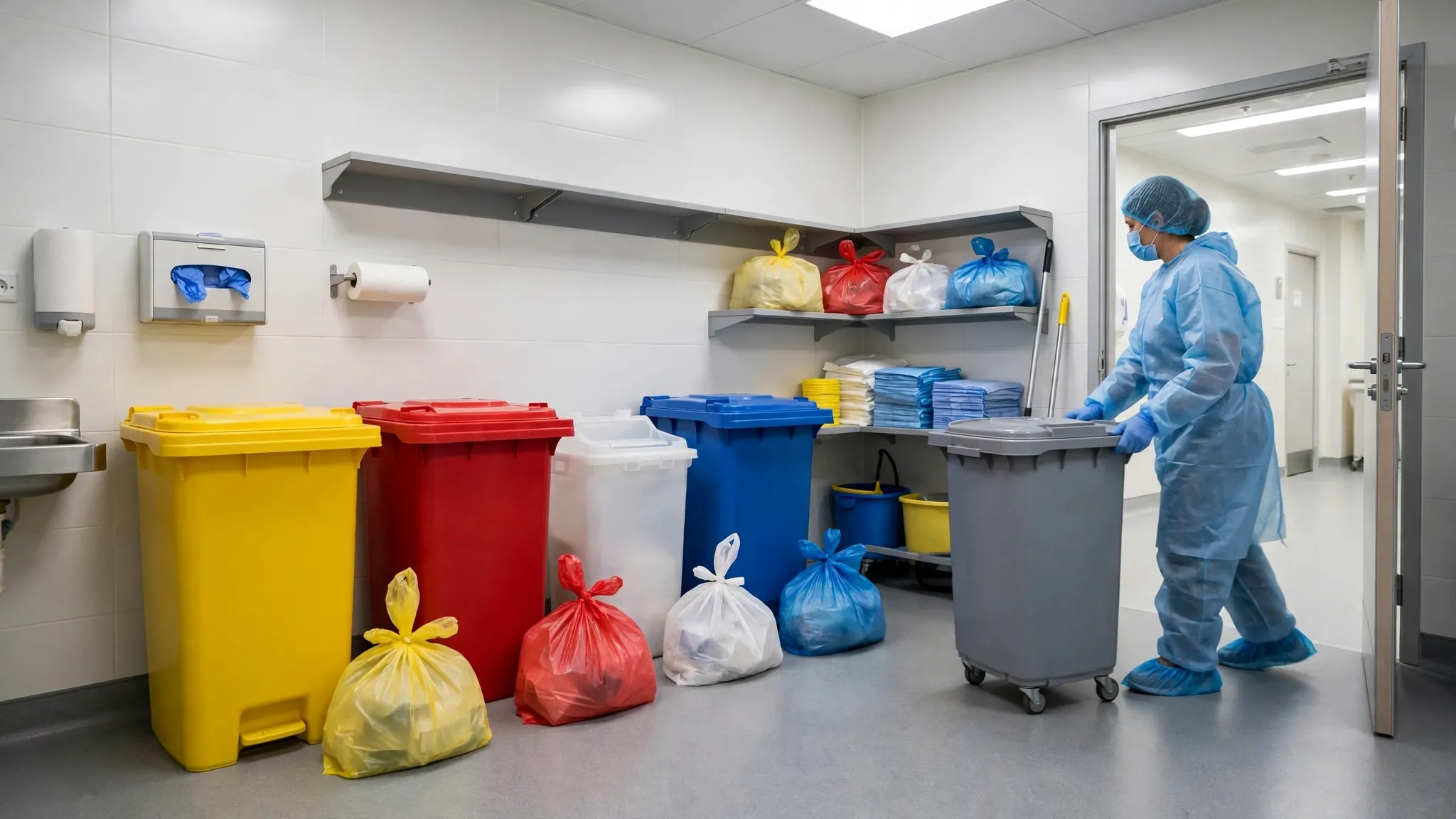
The collection vehicle did not come on Tuesday. By Wednesday morning the waste storage room of a busy hospital held two days of bags: yellow bags tied and stacked by the door, red bags mixed in with them, one sharps container overfilled, and a leaking bag that nobody wanted to touch. The waste itself had been segregated correctly at the wards. What failed was everything after that — the storage discipline and the collection routine that are supposed to move waste out before it becomes a pile.
Bio-medical waste is waste generated during the diagnosis, treatment or immunisation of human beings or animals, and during related research and laboratory work. In India it is governed by the Bio-Medical Waste Management Rules, 2016, and the rules are built on one chain: segregate at the point of generation, store safely and briefly, and hand over to an authorised treatment facility with records to prove it.
How Is Bio-Medical Waste Segregated in India?
India's Bio-Medical Waste Management Rules, 2016 require waste to be segregated at the point of generation into four colour-coded streams — yellow, red, white (translucent) and blue. Segregation happens where the waste is produced, at the bedside, nursing station, operation theatre or laboratory bench, not later in the storage room.
| Colour | What goes in | Container |
|---|---|---|
| Yellow | Anatomical waste, soiled dressings and cotton, expired medicines, chemical waste, pre-treated laboratory waste | Non-chlorinated yellow bags |
| Red | Contaminated recyclable plastics: tubing, IV sets, catheters, urine bags, gloves | Non-chlorinated red bags or containers |
| White (translucent) | Sharps: needles, syringes with fixed needles, scalpels, blades | Puncture-proof, leak-proof, tamper-proof containers |
| Blue | Broken or discarded glass, medicine vials and ampoules, metallic implants | Boxes or containers with blue marking |
The logic is treatment-driven: yellow waste is incinerated, red plastic is disinfected and recycled, white sharps are sterilised and shredded, and blue glass and metal are disinfected before recycling or disposal. One wrong item — a needle in a yellow bag, a blood-soaked dressing in the red stream — can reject the whole bag at the treatment facility.
How Long Can a Hospital Store Bio-Medical Waste?
Untreated anatomical, soiled and biotechnology waste must not be stored for more than 48 hours under the Bio-Medical Waste Management Rules, 2016. That single number is why a missed collection matters: the clock starts when the waste is generated, not when someone notices the pile.
The rules also require a safe, ventilated and secured storage location inside the premises, arranged so there is no secondary handling, pilferage or spillage. In practice that means a dedicated room or enclosure with washable surfaces, bags kept closed and upright, sharps containers sealed before they are moved, and access limited to the staff who handle waste. Bags stacked in a corridor or beside a general waste skip fail the test before an inspector even opens a register.
Good practice inside the room is simple: fill bags only about three-quarters full so they can be tied without compressing the contents, label or barcode every bag leaving the premises as the rules require, and move bags in closed wheeled bins rather than carrying them by hand through public areas.
What Happens When the Collection Is Missed?
A missed pickup is survivable if the system around it works. The occupier — the person with administrative control of the facility — remains responsible for the waste until it reaches the authorised common bio-medical waste treatment facility, so the response is procedural, not improvised:
- Confirm the next pickup in writing. Call the treatment facility, record the new time, and keep the record with the waste register. "The vehicle did not come" is an explanation; a documented reschedule is evidence.
- Re-check the storage room. Every bag closed, tied and upright; sharps containers sealed and replaced, not topped up; any leaking bag placed inside a second intact bag or a closed container without reopening it.
- Stop the pile growing sideways. Extra bags go into the storage room in their colour streams, never into general waste, never into a corridor. If the room cannot hold another day safely, that is a capacity finding to fix, not a reason to mix streams.
- Brief the night shift. Ward staff keep segregating as normal; the failure of a vehicle does not suspend the colour code.
What inspectors look for afterwards is consistency: the waste register, weighment and handover records matching the bags actually generated, barcoded bags traceable to the facility, and a storage room that looks managed rather than abandoned. The disposal discipline is the same one that applies to spill waste in any facility, covered in hazardous waste disposal, step by step.
Where Do Spills Fit Into a Hospital's Waste System?
Hospitals generate spill waste alongside clinical waste: disinfectant and chemical spills in utility rooms, laboratories and stores. Used absorbents from those clean-ups are contaminated material and must be bagged at the point of clean-up, not swept into general waste. A 120L universal spill kit at the utility area gives staff absorbent pads, socks, gloves, goggles and disposal bags in one wheeled bin, and spare hazardous waste disposal bags keep used absorbents contained and clearly marked until collection. Restocking after each use follows the same routine as any other kit — the discipline in this spill kit inspection checklist.
Clinical waste streams still follow the hospital's colour-coded system and its authorised treatment route; spill kits handle the liquid incidents that happen between the wards and the storage room.
What Keeps Inspectors Calm?
Four things, in order: waste segregated into the four colour streams where it is generated; a secured, ventilated storage room with closed, barcoded bags and sealed sharps containers; no untreated waste older than 48 hours; and records — register, handover slips, treatment facility agreement — that match the physical bags. A hospital that can show that chain treats a missed collection as a documented delay. A hospital that cannot, treats it as a pile.
Request a Quote
Equipping utility rooms, laboratories or stores for spill response alongside your waste system? Tell us the liquids you handle and we will help you size spill kits, absorbents and disposal bags to match. Contact Anwill for a quotation or email [email protected]. Chengdu Anwill Technology Co., Ltd. (Anwill) is a spill control products supplier in China, with customers in over 40 countries.