Blog
Hazardous Waste Disposal, Step by Step: From Waste Point to Compliant Disposal
Used absorbents become a compliance problem when bags sit unlabeled or drums overfill. A step-by-step route from waste point to manifest and disposal.
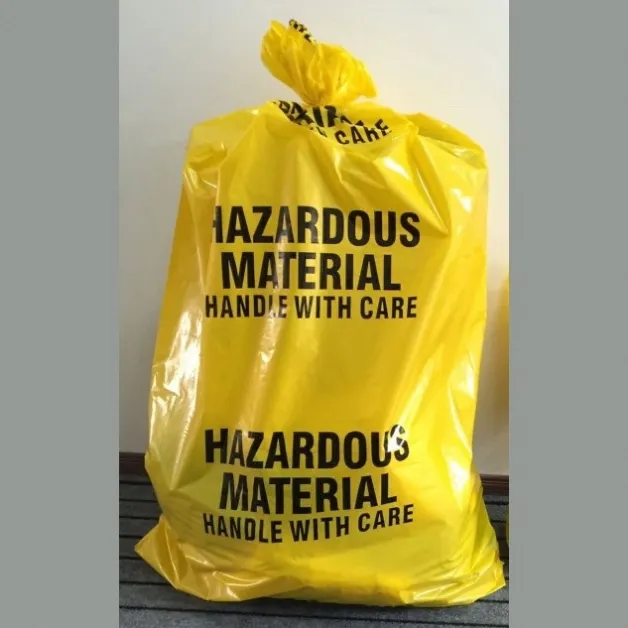
The floor was clean by the end of the night shift. A hydraulic hose had split beside a maintenance bay; the crew ringed the oil with absorbent socks, worked pads across the slick, and bagged the saturated material. The weak point was the two yellow bags by the door: one tied but unlabeled, one still open, and a waste drum nearby with too little room for either. Nobody could say what was in the bags, when the waste was generated, or whether the drum could still be added to.
Hazardous waste disposal is the controlled process of identifying a waste, accumulating it in closed and marked containers, documenting it, and sending it through an authorized transporter to a facility permitted to treat, store or dispose of it. The clean-up creates the waste; the disposal system decides whether it stays routine or becomes an inspection finding.
What Counts as Hazardous Waste After a Spill Clean-Up?
Used absorbents are not automatically non-hazardous just because they are solid. The generator must determine whether the waste is hazardous, using process knowledge, safety data sheets, the spilled material's identity, and testing where knowledge is not enough. A pad that picked up a hazardous chemical can carry that hazard with it.
If the waste is hazardous, federal RCRA generator rules apply and state rules may be stricter. Reporting a spill is a separate question from disposing of the waste, as explained in how much spilled chemical must you report.
Step 1: Separate the Waste Where It Is Generated
Separate spill waste at the point of generation. Keep oil-only absorbents, chemical absorbents, contaminated PPE, free liquid and damaged containers apart unless the site waste procedure puts them in the same stream. Mixing first and sorting later turns a small, well-understood waste into a larger one nobody can characterize confidently.
Bag saturated pads, socks and pillows as they come off the floor. Purpose-made hazardous waste disposal bags help: Anwill's 90 × 120 cm yellow bags use double-layer 0.14 mm film printed “HAZARDOUS MATERIAL — HANDLE WITH CARE” and are supplied 50 per pack. Where a rigid accumulation container is required, bagged waste still goes into that container rather than standing alone as storage.
Do not use a bag to hide free liquid. Dripping absorbents and separately collected liquid belong in a compatible closed container under the site procedure, not in a sealed bag that may leak.
Step 2: Use a Closed, Compatible Container — and Mark It Immediately
At or near the point of generation, a US satellite accumulation area may hold up to 55 gallons of non-acute hazardous waste under the control of the operator of the process. The container must stay closed except when waste is being added or removed, and it must be marked “Hazardous Waste” with an indication of the hazards of the contents. An open drum with a bag balanced on top fails both tests at once.
Compatibility matters as much as closure: container, liner and closure must suit the waste. Inspect the container before the first bag goes in. If the original drum is leaking or unfit, enclose it rather than emptying it by hand — an overpack salvage drum is the practical tool.
Marking is not paperwork for later: “Hazardous Waste” and the hazard indication go on when accumulation starts, while the crew can still say what the waste is.
Step 3: Move the Waste Before the Accumulation Clock Becomes the Problem
Once a satellite accumulation container exceeds its quantity limit, the excess container must be dated and moved to the central accumulation area within three consecutive calendar days. Plan that move before the drum is full, not after.
In central accumulation, the start date and generator category control how long waste may stay on site:
US generator category | Monthly hazardous waste generated | Federal on-site accumulation limit |
|---|---|---|
Small quantity generator (SQG) | More than 100 kg and less than 1,000 kg | 180 days, or 270 days if the designated facility is 200 miles or more away |
Large quantity generator (LQG) | 1,000 kg or more | 90 days |
These are federal baselines; state programs can be stricter, and very small quantity generators have their own conditions. Every dated container needs a named owner, a pickup trigger well before its deadline, and inspections for leaks, open lids and missing marks.
Step 4: Package, Manifest and Hand Over to an Authorized Chain
Before hazardous waste leaves the site, it must be packaged, marked and labeled for transport, and SQGs and LQGs must prepare a hazardous waste manifest for off-site shipment. The manifest designates the permitted receiving facility, and the transporter must be authorized to carry the waste. The signed copy that comes back evidences arrival, so keep manifest records for at least three years under the federal rule.
Check the load against the paperwork before loading: container count, marks and labels, closures secured, no leaking containers, and the waste description matching what is actually on the pallet.
What Should Be Ready Before the Next Spill?
The route works when consumables are already at the waste point: disposal bags and ties, labels and markers, a sound accumulation container with room in it, an overpack drum, and PPE matched to the liquid. Restock belongs with inspection, because a kit used on the night shift is ready again only when its bags, absorbents and PPE have been replaced — the discipline covered in this spill kit inspection checklist.
Run the sequence in order and the waste can be traced from the bay door to its final facility without relying on memory. The clean floor is only the middle of the job.
Request a Quote
Setting up spill-waste handling at a maintenance bay, warehouse or process area? Tell us the liquids you handle and the absorbents you use, and we will help you size the disposal bags, spill kits and overpack drums to match. Contact Anwill for a quotation or email [email protected]. Chengdu Anwill Technology Co., Ltd. (Anwill) is a spill control products supplier in China, with customers in over 40 countries.