PFAS in Farm Soil: What Landowners and Contractors Are Being Asked Now
PFAS in farm soil changes how contractors sample, stockpile and move earth. A practical readiness checklist for landowners, drainage crews and spill response.
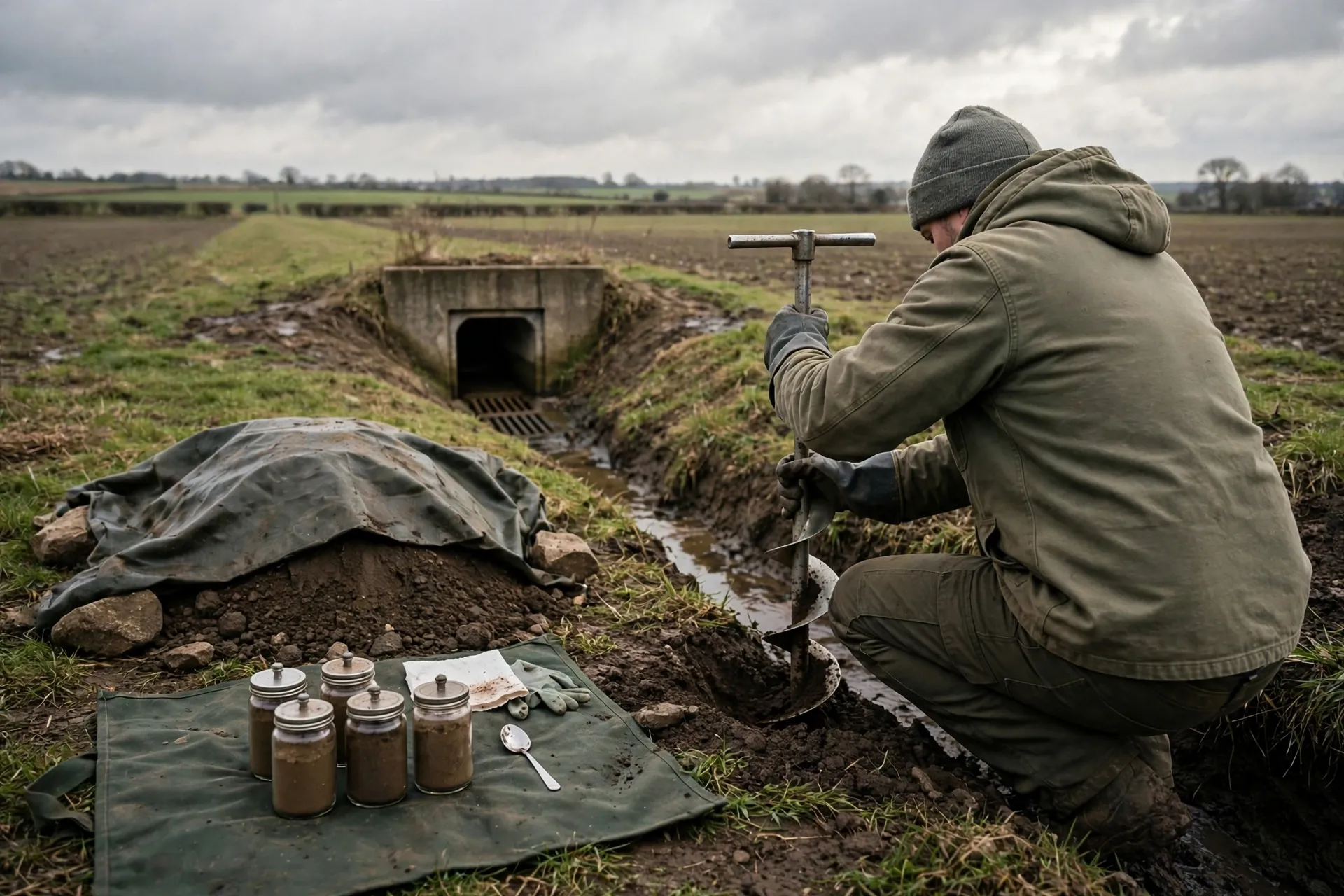
The excavator was already tracked to the field edge when the landowner asked the question that stopped the job: could the soil from the drainage trench be spread back over the field? Nobody on site had a test result. The spoil heap sat a few metres from an open ditch, rain was forecast, and the crew had planned to level the ground before leaving. The machine stayed off while the contractor separated the soil, covered the heap, and called for a sampling plan.
PFAS in farm soil means per- and polyfluoroalkyl substances are present in the ground at levels that may affect how that soil can be handled, moved, reused or disposed of. PFAS are persistent synthetic chemicals, so the practical question is rarely whether the field looks clean; it is whether the people moving the soil can show where it came from, how it was tested, and where it went.
What Are Landowners and Contractors Being Asked to Show?
The first request is usually evidence, not reassurance. A landowner may be asked for the field's history: past sludge or biosolids applications, irrigation sources, nearby industrial activity, firefighting incidents, imported fill, and previous soil or water results. A contractor may be asked for sampling locations, depths, laboratory reports, the stockpile plan, and the destination for every load.
PFAS can reach soil through treated sewage sludge applied to land, contaminated irrigation water, some pesticide uses, industrial emissions, and firefighting foam. A short site history does not prove contamination, but it tells the sampler where to look.
Why Can't PFAS Soil Be Judged by Sight or Smell?
PFAS contamination cannot be confirmed or ruled out by colour, smell, or an oily sheen. Soil can store PFAS and later release them to drainage water, so a dry surface and a tidy trench do not answer the question.
This is where jobs go wrong. A crew sees ordinary brown soil, mixes topsoil from several parts of the field, and loses the ability to connect a later result to a specific stockpile. Once soils from different areas and depths are blended, the disposal decision becomes harder.
What Should Happen Before Soil Is Moved?
Keep each soil stream separate until the results are known. Excavated soil from different field areas, depths, or visibly different layers should not be combined into one anonymous heap. Label each stockpile with its source area and date, cover it before rain, and keep it away from ditches, drains and watercourses.
Sampling should follow the project plan, not convenience. The sampler needs agreed locations and depths, clean tools between samples, suitable containers, chain-of-custody paperwork, and a laboratory method matching the PFAS compounds being asked about. The report should name the compounds tested and the reporting limits, not just say “PFAS tested”.
| Question being asked | Evidence to have ready | Why it matters |
|---|---|---|
| Where did this soil come from? | Field plan, sampling points, depths and dates | Connects each result to a real location |
| Has it been mixed? | Separate, labelled stockpiles by area and depth | Prevents one result being applied to the wrong soil |
| Can rain wash it into a drain? | Covered heaps, set-back from ditches, runoff controls | Stops soil becoming a water problem |
| Where is it going? | Written destination and transfer records | Shows the soil was not moved on assumption |
| What was actually tested? | Laboratory report with compounds and reporting limits | Avoids vague “PFAS-free” claims |
During the work, control dust and muddy runoff, keep fuel and hydraulic oil away from open soil, and use the PPE and hygiene controls set by the site assessment. If a hose bursts beside the trench, treat it as a separate liquid spill: contain it, protect the drain, and keep contaminated absorbents apart from the soil stream. The route for used material is covered in hazardous waste disposal after a spill clean-up.
Where Do Absorbents Fit — and Where Do They Not?
Absorbent pads and socks do not remove PFAS from soil or groundwater. Their role on a PFAS-affected job is narrower and still useful: they control diesel, hydraulic oil and other liquid spills from plant, and they help protect drains while earthworks are under way.
Choose the absorbent for the liquid in front of you. Oil-only pads suit fuel and lubricating oil; universal absorbents are safer where the liquid is mixed or uncertain, as explained in universal vs oil-only vs chemical absorbents. At a field drain or yard gully, a urethane drain cover helps stop a liquid spill reaching the watercourse while the source is isolated.
Do not let spill products blur the PFAS decision. A pad can pick up diesel from a leaking fitting; it cannot turn untested soil into reusable soil. Keep the two records separate: spill response for liquids, sampling and documented destination for earth.
What Records Close the Job Cleanly?
A clean close-out file links the field plan to the laboratory reports, stockpile labels to load records, and the final destination to transfer paperwork. Photographs help only when dated and tied to a location on the plan.
Restock is part of the same discipline. If pads, socks, drain covers or disposal bags were used, replace them before the next job. A simple spill kit inspection checklist keeps that check routine.
The crew in the opening scene did not need a faster excavator. They needed a pause, separate stockpiles, a sampling plan, and drain protection before the rain arrived. That is the readiness buyers are now asking for: soil handled as evidence, not as anonymous dirt.
Request a Quote
Preparing a drainage, earthworks or farm-infrastructure job where machinery liquids must be controlled near drains and watercourses? Tell us the liquids on site and the absorbents you already use, and we will help you match spill kits, absorbent pads and drain covers to the work. Contact Anwill for a quotation or email [email protected]. Chengdu Anwill Technology Co., Ltd. (Anwill) is a spill control products supplier in China, with customers in over 40 countries.