Universal vs Oil-Only vs Chemical Absorbents: Which One Do You Need?
White, grey or yellow — the colour of an absorbent pad decides what it can soak up. Pick the wrong one and a mixed oil-and-coolant spill will beat your kit. Here's how to choose.
The rain had been coming down since mid-afternoon, and the maintenance bay floor was already wet where forklifts had tracked water in from the yard. Then a hydraulic hose on a forklift burst, spraying oil across a bay where a drum of water-based coolant had been weeping from a loose bung all morning. Oil on water, coolant underneath, all of it sliding toward the floor drain. The crew did what crews do: they grabbed the nearest carton of pads and started laying them down. The pads drank the oil fast — and then stopped. The coolant was still there, a pale sheen the pads would not touch, because the pads in that carton were white oil-only pads, and oil-only pads repel water. The crew had the right reflex and the wrong pad.
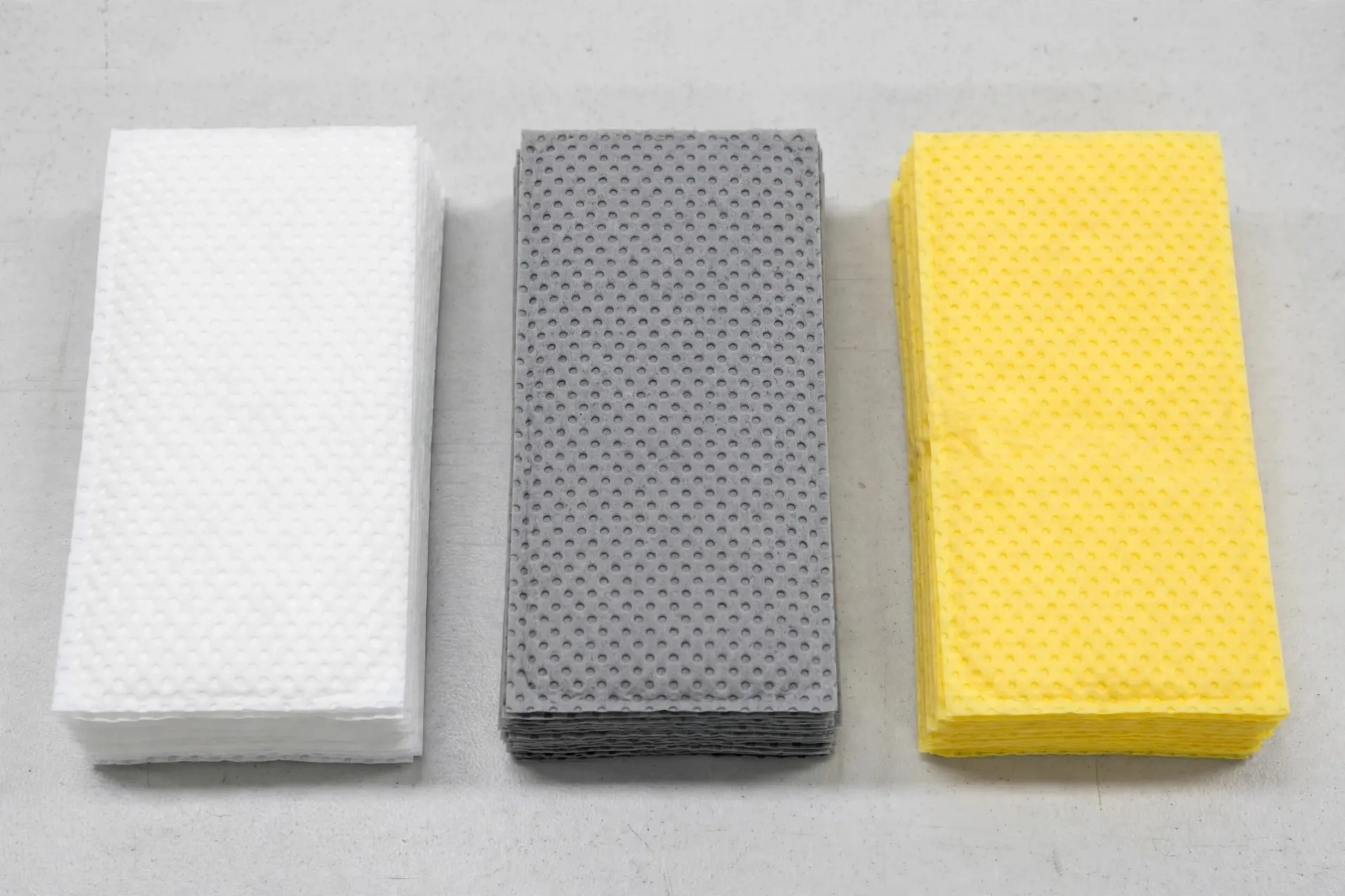
An absorbent pad is a meltblown polypropylene sheet that soaks up spilled liquid — and its colour tells you which liquids it is made for: white for oil only, grey for almost anything, yellow for aggressive chemicals. Same size, same material family, three different jobs. Getting the type right matters more than getting the weight right, because the wrong type does not absorb slowly — it does not absorb at all.
What Do the Three Colours Actually Mean?
White — oil-only. White pads absorb oil, diesel and fuel while repelling water, so they keep working on wet floors and even on water itself. They are the pads for hydrocarbons and nothing else. A white pad laid on a water-based liquid stays dry: it will not pick up coolant, water, or most water-soluble chemicals.
Grey — universal. Grey pads absorb oil, water, coolants and most common workshop liquids. They are the general-purpose choice when the spill could be almost anything, or when you do not have time to identify the liquid first. The trade-off is that on a pure oil spill on water, a grey pad wastes capacity soaking up water alongside the oil.
Yellow — chemical. Yellow pads are made for acids, alkalis and aggressive chemicals, and the bright colour means the right pad is easy to spot in an emergency. They are the pads for the chemical store, the plating line and anywhere corrosive liquids are handled.
The Three Types at a Glance
| White (oil-only) | Grey (universal) | Yellow (chemical) | |
|---|---|---|---|
| Absorbs | Oil, diesel, fuel | Oil, water, coolants, most workshop liquids | Acids, alkalis, aggressive chemicals |
| Repels / will not pick up | Water and water-based liquids | Nothing much — that is the point | Check the SDS for the specific chemical |
| Best for | Oil on water, wet floors, fuel handling | Mixed spills, unknown liquids, whole-site stocking | Chemical stores, plating and process lines |
| Never use for | Coolant or chemical spills | Oil that has reached open water | Liquids you have not identified |
Anwill's pads come in one standard size — 40 × 50 cm — in 100, 200 and 400 GSM, and the same sizes and carton quantities apply across all three types: 400 pads per carton at 100 GSM, 200 at 200 GSM, 100 at 400 GSM. The colour is the decision; the weight is the capacity. Our Oil Absorbent Pads 200gsm, Universal Absorbent Pads 200gsm and Chemical Absorbent Pads 200gsm are the same sheet in the three colour codes — pick the colour first, then the weight for the job.
Why the Wrong Pad Costs You Twice
The first cost is the pad itself. A carton of white pads thrown at a coolant spill is a carton used up with nothing cleaned — every pad laid down is a pad in the disposal bag, and the spill is still on the floor. The second cost is time. While the crew fetches the right carton from the store, the liquid keeps spreading toward the drain, and a spill that needed ten minutes now needs an hour and a report. In a maintenance bay during monsoon season, where the floor is wet half the year, that mistake is not rare: the pad that works brilliantly on a dry oil leak fails the moment water is part of the spill.
The same logic runs the other way. Grey universal pads thrown at oil floating on a bunded sump or a wet yard will soak up water first and saturate before they have taken much oil. On open water, only white oil-only pads belong — they float, they take the oil, and they leave the water behind. Using universal pads where oil has reached water wastes capacity and slows the clean-up exactly when speed matters most.
Can One Pad Type Cover the Whole Site?
For many sites, yes — and that type is grey. If your bays handle mixed liquids, if the crew cannot always identify a spill in the first minute, or if you want one carton type on every shelf so nobody has to choose under pressure, stock universal pads as the default. They cover the widest range, and a single type simplifies training, storage and restocking.
But two cases still need their own type. Keep white oil-only pads wherever oil meets water: fuel handling areas, bunded sumps, wash bays and any drain that leads outside. And keep yellow chemical pads at the chemical store and anywhere acids or alkalis are used — a universal pad may handle a mild chemical, but for aggressive chemicals you want the pad made for the job, in a colour nobody can mistake for the general stock. The practical answer for a mixed industrial park site is usually all three: grey everywhere, white at the fuel and water points, yellow at the chemical store.
How to Tell in 30 Seconds Which Pad to Grab
First, look at the liquid and the label on the container it came from. Oil, diesel or fuel — white. Acid, alkali or a chemical named on the drum — yellow. Water-based coolant, a mix, or anything you cannot name in five seconds — grey. Second, check for water: if the spill is on a wet floor, in a sump or floating on water, and it is oil, it has to be white. Third, check the safety data sheet if the liquid is a chemical you do not recognise — the SDS tells you what the liquid is, and the pad colour follows from that. If you still cannot identify it, treat it as chemical: gloves, goggles and yellow pads, and get the SDS before you touch it. For a deeper look at how weight and size fit into the choice, see our guide to oil absorbent pads: GSM, size and when to use 100 vs 200 vs 400 GSM.
The Same Colour Code Runs Through Socks, Rolls and Kits
Pads are not the only absorbents that follow the colour code. Oil absorbent socks ring a spill to stop it spreading, and they come in the same three types — so the sock you lay around a chemical leak must be the same yellow as the pads you put on top of it, or the ring fails while the middle works. Spill kits follow the same system too: every Anwill kit size, from the portable 20L bag to the 660L wheeled bin, comes in oil-only, chemical and universal versions, so the kit on the wall should match the liquids in that bay. If you are choosing between kit types as well as pad types, our guide on how to choose the right spill kit walks through the same decision by liquid first, size second. The same colour code runs through our industrial wipes - white for oil, grey for universal, yellow for chemical - so the wipe you grab follows the same rule as the pad.
Store Them Dry, Even in the Wet Season
One last point, and it matters most where the air stays humid for months: keep absorbent cartons sealed, off the floor and out of direct rain. Meltblown polypropylene pads work by soaking liquid into their fibres — a carton left open in a damp store arrives at the spill already partly loaded, and a pad that starts wet holds less when it counts. Keep the cartons beside the kit, not in a distant storeroom: a pad you cannot reach in thirty seconds is a pad you will not use.
Request a Quote
The crew in that bay had the right reflex — they reached for pads first. What they needed was the right colour in the nearest carton. Tell us what liquids your site stores and how much, and we can recommend the right absorbent type and weight — oil-only, universal or chemical — supplied in cartons or as part of a custom spill kit. Contact Anwill for a quotation or email [email protected]. Chengdu Anwill Technology Co., Ltd. (Anwill) is a spill control products supplier in China, with customers in over 40 countries.