How to Store Absorbents So They Work When You Need Them
A spill kit is only useful if the absorbents inside still work. Damp, sun-baked or crushed pads soak up nothing. How to store pads, socks, rolls and kits so they are ready when a spill happens.
A hydraulic hose bursts on a press line late in the afternoon shift, and oil is spreading across the concrete toward a floor drain. The operator shuts the press down, grabs the wall-mounted spill kit, and pulls out a stack of pads — but the pads are damp and stuck together, the socks feel flat and limp, and the bag of loose granules at the bottom of the kit has set into a solid brick. The kit had sat on the floor beside the wash bay for two summers, the lid left open after the last small clean-up, and nobody had checked it since. The crew contained the spill in the end, with rags, a mop bucket and a contractor call-out — but the kit that was supposed to save twenty minutes cost them a day.
Absorbents are meltblown polypropylene pads, socks, rolls, pillows and granules that soak up oil, chemicals or mixed liquids so a spill can be contained, collected and disposed of — and storage is what decides whether they still work on the day they matter.
What Ruins Absorbents in Storage?
Four things do the damage, and all four are avoidable. Water and humidity are first: universal pads absorb water as readily as oil, so a pack stored on a damp floor or under a leaking roof is already half-spent before it is opened, and loose granules exposed to moisture clump into lumps that will not spread. Oil-only pads repel water, so a splash does them less harm, but a soaked pack is still heavy and messy to handle in a hurry. Second is sunlight: ultraviolet light breaks down polypropylene over time, so pads left on a sunny loading dock turn brittle and shed fibres instead of soaking. Third is heat: a sealed metal container or an unventilated shed in summer gets far hotter than the warehouse around it, and sustained heat softens and fuses the fine meltblown fibres that do the absorbing. Fourth is compression: socks and pillows work because they are loose and lofty, and months under a stack of cartons crushes that loft out of them. Chemical vapour is a fifth, quieter risk — pads stored beside open solvent or acid containers can pick up fumes and degrade before use.
How Should You Store Each Type of Absorbent?
The rule is the same for every type — dry, shaded, cool, sealed and off the floor — but each type has its own weak point.
| Absorbent | What ruins it in storage | How to store it |
|---|---|---|
| Oil absorbent pads | Damp, sunlight, heat | Sealed poly packs, on racking, out of direct sun |
| Universal absorbent pads | Any moisture — they absorb water too | Sealed packs, never on a concrete floor, away from wash bays |
| Chemical absorbent pads | Chemical vapour, cross-contamination | Sealed packs, in the chemical store, away from incompatible liquids |
| Absorbent socks and pillows | Compression, damp | Loose in bags or bins, nothing stacked on top |
| Absorbent rolls | Damp edges, crushing | Upright on a roll rack or flat on a shelf, ends protected |
| Loose granules | Moisture — they clump into bricks | Sealed bags, off the floor, lid on the bin |
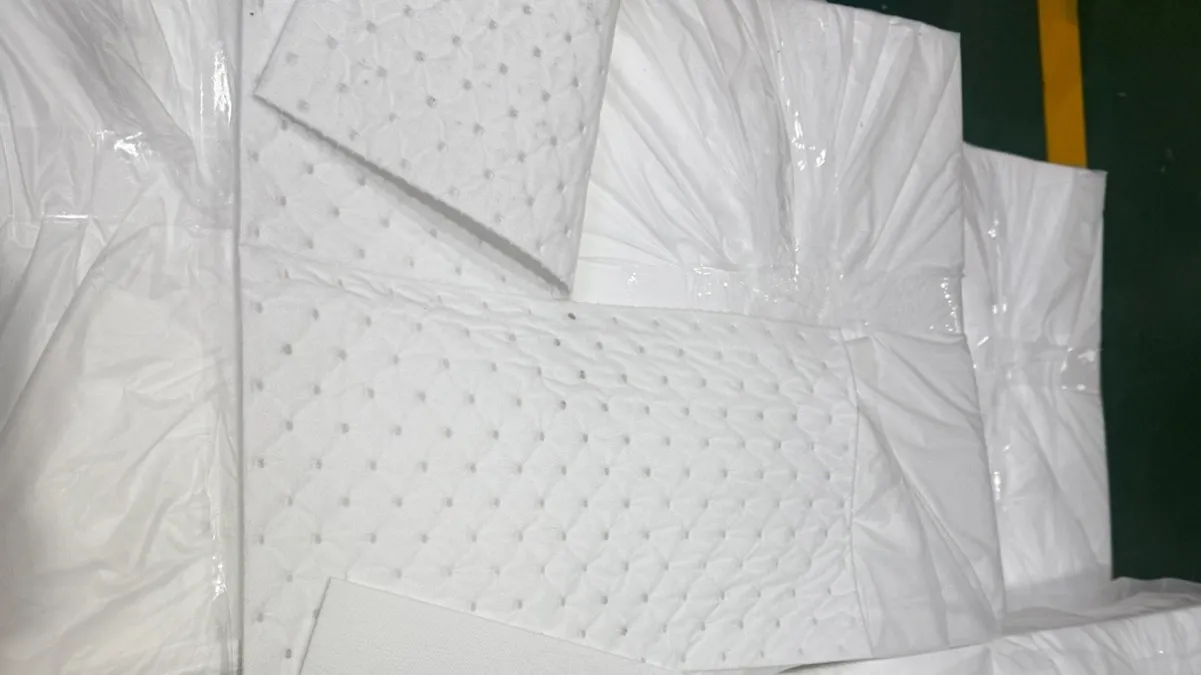
Keep pads in their original sealed packaging until the day they are needed — the bag is the storage system, and an opened pack in a humid plant is already working on the wrong liquid. Our oil absorbent pads and absorbent socks ship in sealed packs for exactly this reason; break the seal only when you load a kit or answer a spill.
Where Should the Stock Live?
Store the bulk stock in one dry place and the working kits where the risk is. A central store — a dry corner of the warehouse on racking or pallets, away from the wash bay, the steam lines and the sunny dock doors — holds the sealed cartons. Point-of-use kits sit within a 30-second walk of each risk point: the press line, the drum store, the fuel island. Never store absorbents on a bare concrete floor: concrete wicks moisture, and a floor-level pack is the first thing a forklift, a mop bucket or a burst pipe finds. Label each shelf by type — oil-only, universal, chemical — so nobody grabs the wrong pack in a hurry, and keep the chemical absorbents in the chemical store, not mixed in with the general stock. If you are choosing between pad weights, our guide to oil absorbent pad GSM explains what 100, 200 and 400 gsm mean in practice, and our guide to universal vs oil-only vs chemical absorbents explains which type belongs where.
How Often Should You Check Stored Absorbents?
Stored absorbents fail quietly, so check them on a schedule, not when a spill forces you to. Inspect every spill kit monthly: open it, confirm the contents list matches what is inside, and replace anything damp, torn or used. A 120L oil spill kit that has been raided for a small drip and never restocked is a 20-litre kit wearing a 120-litre label. Check the bulk store every quarter: look for torn packs, damp cartons, crushed socks and granule bags that have gone hard, and rotate the stock first-in, first-out so the oldest packs get used first. Meltblown polypropylene stored dry and out of sunlight keeps for years — there is no short expiry date to chase — but that only holds if the storage conditions hold. Under the EPA's SPCC rule, facilities with more than 1,320 gallons of oil in aboveground storage need a spill prevention plan; a plan that names absorbents as the response is only as good as the absorbents named in it.
What Does Bad Storage Actually Cost?
A ruined pad costs a few cents. A spill that cannot be contained costs a shift of downtime, a contractor call-out, contaminated product, and — if oil reaches a drain or a waterway — a reportable incident and a fine that dwarfs the price of the whole absorbent store. The fix costs nothing: a dry shelf, sealed packs, a monthly check. The most expensive absorbent in any plant is the one that was there when you needed it and did not work.
Request a Quote
Check your kits this week: open one, feel the pads, look at the socks. If anything is damp, crushed or half-empty, replace it now — not on the day a hose bursts. Contact Anwill for a quotation or email [email protected]. Chengdu Anwill Technology Co., Ltd. (Anwill) is a spill control products supplier in China, with customers in over 40 countries — oil, universal and chemical absorbent pads, socks, rolls and spill kits in 20L–660L, shipped from China.