"It Will Only Take a Second": The Shortcut List Behind Most Spill and Injury Reports
Most spill and injury reports start with a skipped step that saved under a minute. The shortcut list to spot, stop, and design out of the job.
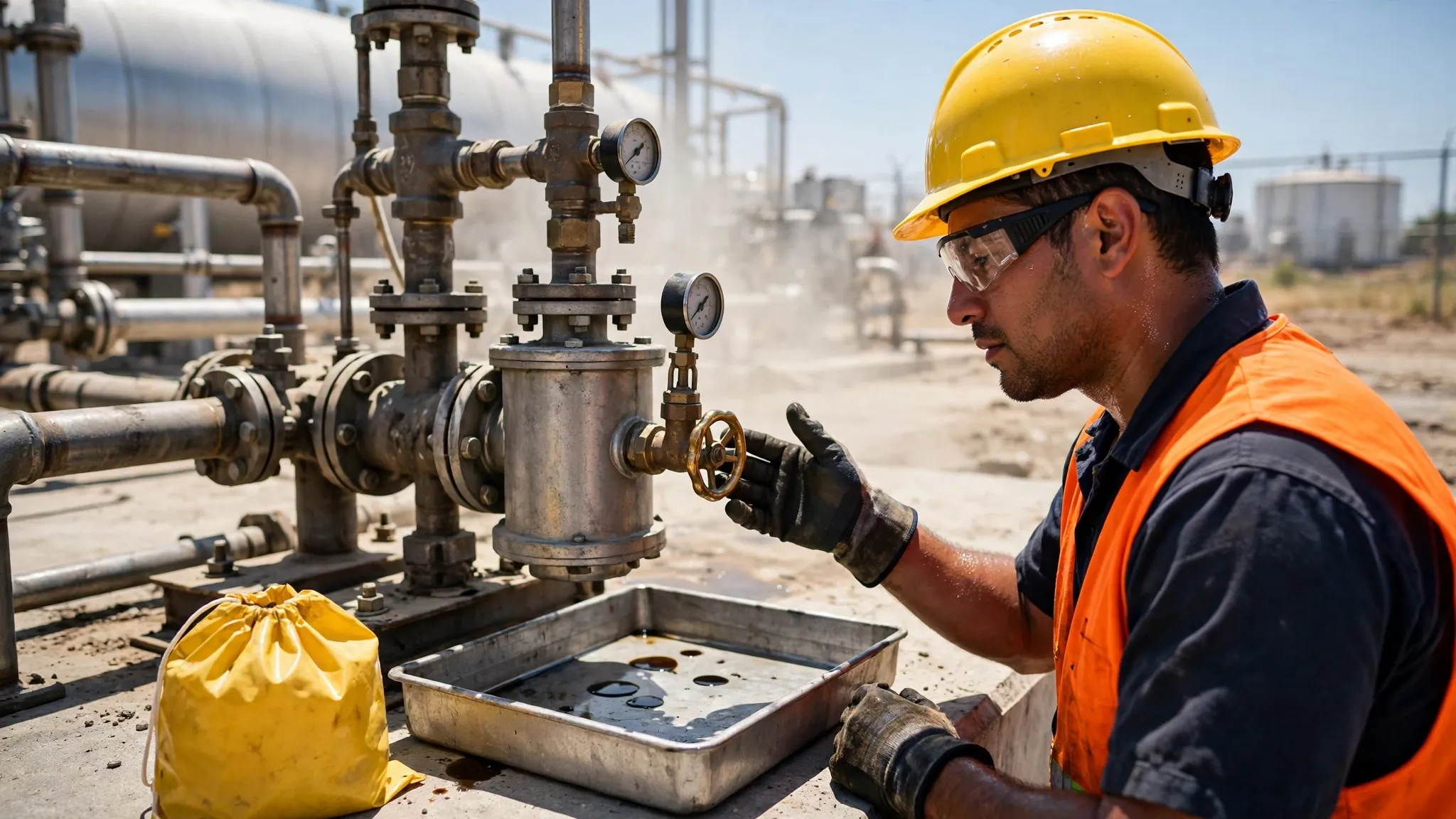
The job looks small. A maintenance fitter at a pump skid in hot weather needs to change a clogged filter element before the next transfer. The permit is signed, the pump is stopped, and the replacement element is on the trolley. The drip tray is not — it is still at the workshop, about 40 metres away. The fitter looks at the filter bowl, looks at the walk back, and says the sentence that starts more incident reports than any equipment failure: "It will only take a second." Gloves come off because the bowl is easier to grip bare-handed. The drain-down step is skipped because the line "should be nearly empty." The bowl cracks open, a litre of diesel and sludge drops onto the concrete, and the fitter steps back into the edge of the spreading pool. Nobody is badly hurt, but the transfer is delayed an hour and the area needs a full clean-up.
A work shortcut is a skipped step in a safe work method — draining, isolating, wearing PPE, placing containment — taken to save time on a task that looks too small to matter. Shortcuts feel efficient, which is why the same short list appears in spill and injury reports again and again.
Why Do Experienced Workers Take Shortcuts?
Experience is part of the problem. A shortcut that works nine times teaches the worker that the skipped step was unnecessary, so the tenth time it is not even considered. Heat makes it worse: gloves, goggles and coveralls are genuinely uncomfortable, and every extra walk to fetch a tray or a spill kit feels like wasted effort. Add a waiting transfer and a task framed as "just a quick one," and the safe method loses to the fast method. The fix is making the safe method the easy method: PPE stored at the job, containment placed before work starts, and spill supplies within arm's reach — the same placement logic behind a monthly spill kit inspection checklist.
Which Shortcuts Show Up Again and Again in Spill and Injury Reports?
Six shortcuts account for a large share of small spills and minor injuries on industrial sites. Each one saves less than two minutes; each one removes the barrier that would have kept a routine task routine.
| Shortcut | Time "saved" | What it removes |
|---|---|---|
| Gloves off for a better grip | Under 1 minute | Skin protection against fuel, oil and solvents |
| Goggles pushed up or left off | Seconds | Eye protection against splash when a line or bowl opens |
| No drip tray or absorbent pad under the work | 1–2 minutes | Containment for the residual liquid that is always in the line |
| Skipping drain-down or isolation | 2–5 minutes | The step that proves the line is actually empty and safe |
| Decanting without a funnel or pump | 1 minute | Control of the pour — the most common small-spill moment |
| Spill kit left at the workshop | 1–2 minutes | First-minute response; the spill spreads while someone walks |
The pattern is clear: none of these shortcuts removes a paperwork step. Every one removes a physical barrier between the worker and the liquid. That is why injury and spill so often arrive together — the skipped glove that lets diesel reach skin is paired with the skipped tray that lets diesel reach the floor, the drain, or the worker's boots. For matching gloves, goggles and clothing to the liquid being handled, see PPE for spill cleanup: gloves, goggles and protective clothing.
How Do You Stop a Shortcut Before It Becomes a Spill?
Stop the shortcut at the setup, not at the moment of temptation. A two-minute pre-job check catches most of the list: Is the line drained and proven empty? Is a tray or absorbent pad under the work point? Are gloves and goggles on, not in a pocket? Is the spill kit at the job, not at the workshop? If any answer is no, the job is not ready to start, however small it looks. Mid-task, with the bowl half-open and diesel already moving, nobody makes good decisions; before the first bolt turns, everybody can.
When a shortcut has already produced a spill, the first minute decides the size of the job. Stop the source if it is safe to do so, keep people out of the liquid, protect the nearest drain, and contain the edge of the pool before cleaning the middle. A 120L oil spill kit placed at the work point turns that sequence into a two-minute task; the same kit 40 metres away turns it into a spreading pool and a report. For the full first-response sequence, see chemical spill response: what to do in the first 10 minutes.
What Should Supervisors Check on a Hot-Weather Job?
Supervisors prevent shortcuts by removing the reasons for them. Three checks do most of the work. First, stage the job before it starts: tray, absorbents, spill kit and the right PPE at the work point, so the safe method costs no extra walking. Second, treat "it will only take a second" as a stop phrase — ask which step is about to be skipped, and put that step back. Third, plan hot-weather work honestly: rotate people, schedule heavy PPE tasks for cooler hours where the programme allows, and never let a waiting transfer set the pace of a line-breaking task. A one-litre spill cleaned up in ten minutes is minor; the same litre reaching a drain, a walkway or a worker's eyes is an incident and an audit finding. The difference is whether the two-minute setup happened before the one-second shortcut.
Request a Quote
Shortcuts thrive where the safe supplies are somewhere else. Put the kit at the job. Contact Anwill for a quotation or email [email protected]. Chengdu Anwill Technology Co., Ltd. (Anwill) is a spill control products supplier in China, with customers in over 40 countries — spill kits, absorbent pads and socks ready to stage at the work point, so the safe method is also the fast one.