Blog
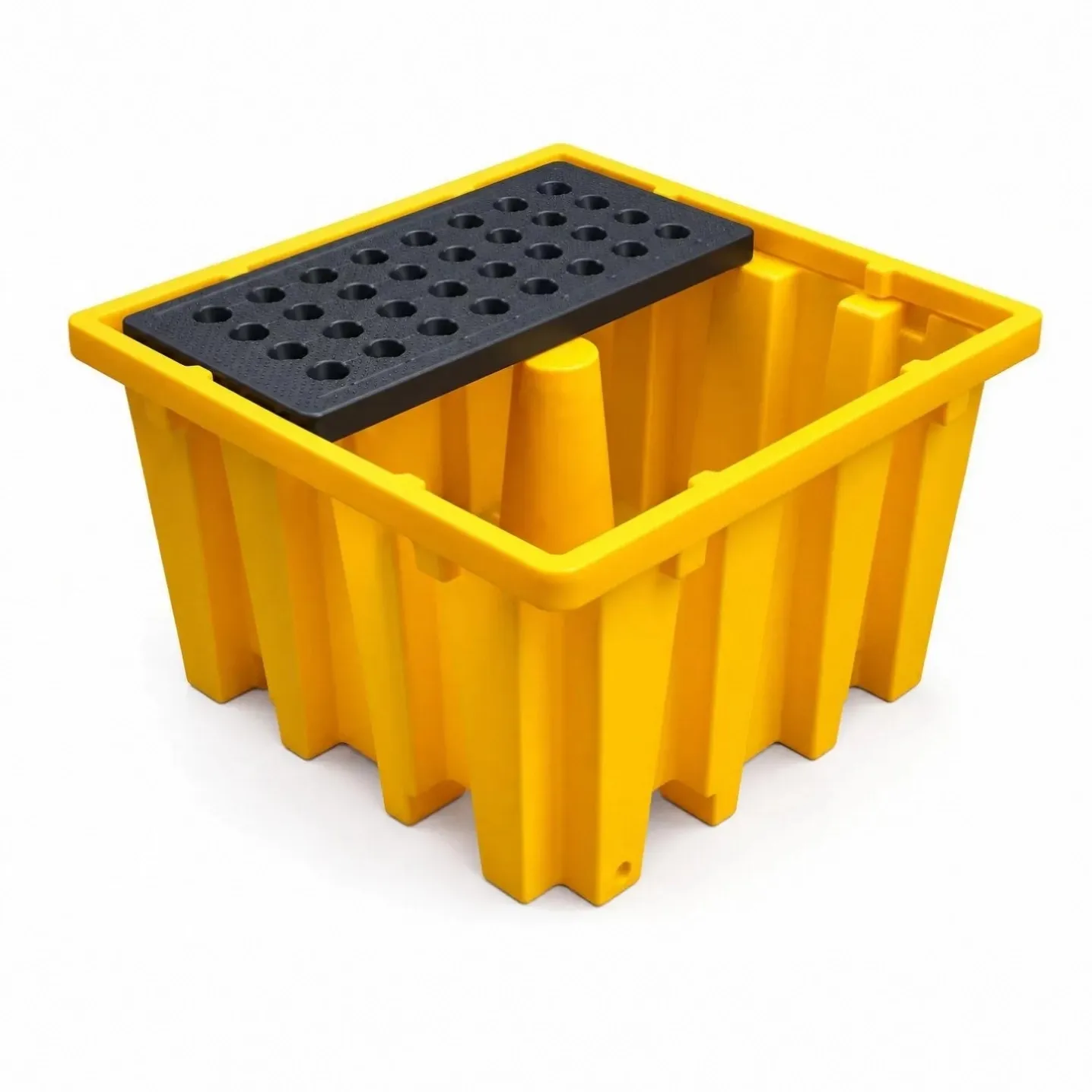
Spill Pallets: IBC vs Drum Containment — A Buyer's Guide
One leaking drum, one IBC on bare concrete — which spill pallet actually contains it? Sump sizes, load ratings and the 110% rule for drum and IBC storage.
One leaking drum, one IBC on bare concrete — which spill pallet actually contains it? Sump sizes, load ratings and the 110% rule for drum and IBC storage.

The alarm sounds mid-transfer and the crew hesitates. When to leave at once, what to secure in seconds, and the evacuation mistakes that turn a drill into an injury.

Bare hands on a chemical spill is how a small leak becomes an injury. The gloves, goggles and coveralls to wear before you touch it — matched to the liquid, not grabbed at random.
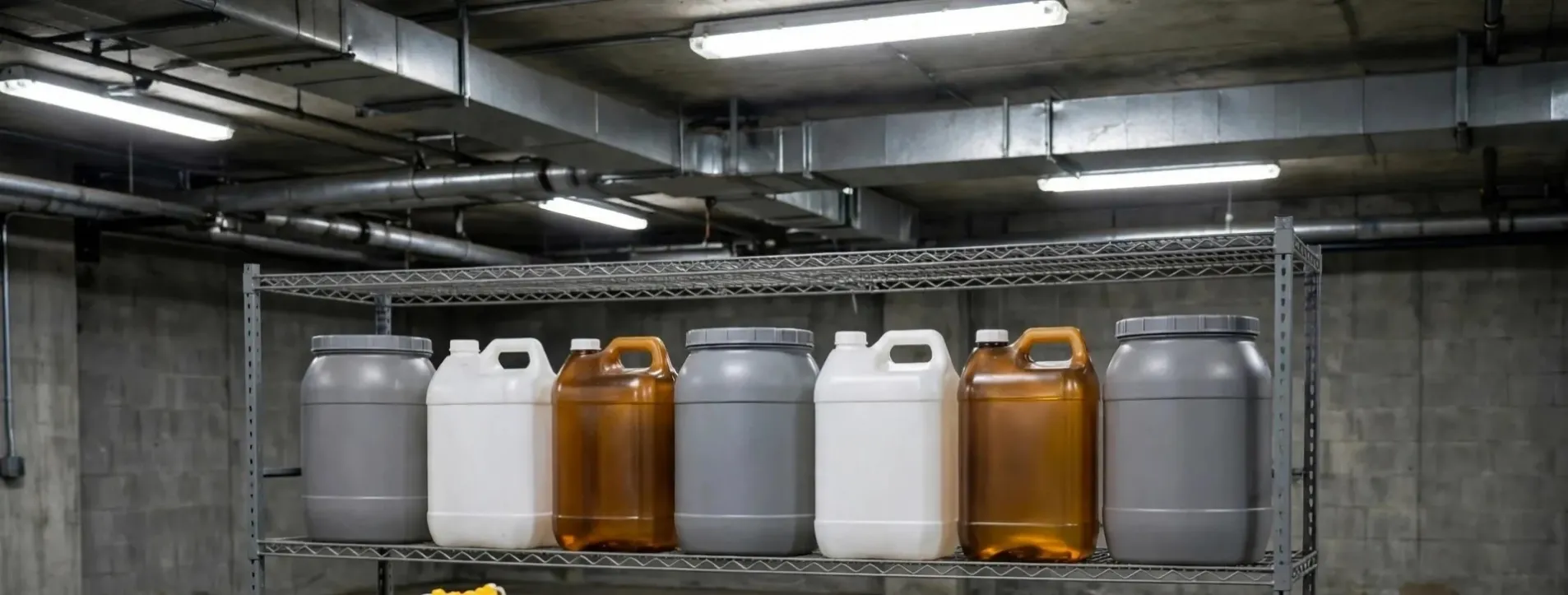
An inspector stops at a row of unlabeled jugs — and the citation starts there. What OSHA HazCom requires on secondary containers, and the labeling routine that keeps a site clean.

A drum nearly fell off the forks. Nobody was hurt, nothing spilled — so nobody wrote it down. Two weeks later it did fall. Why near-miss reporting is the cheapest spill prevention a site has.

The inspector left 14 findings. Six months later nine were still open — including the empty spill kit. How to track corrective actions so fixes actually get done, verified and closed.
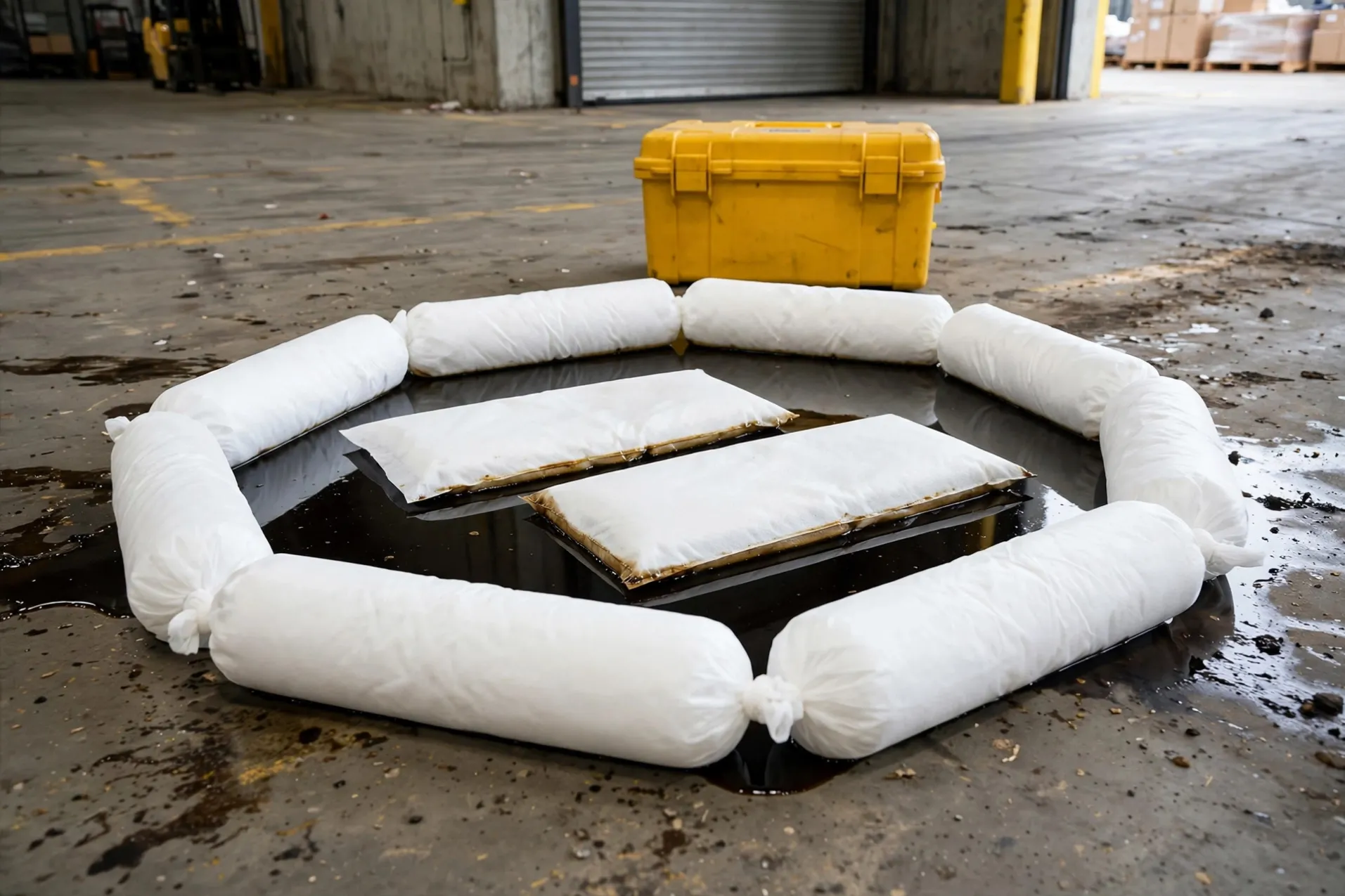
Socks ring a spill, booms fence oil on water, pillows soak up pooled oil where pads can't reach. Which one to grab first — and the mistakes that waste all three.
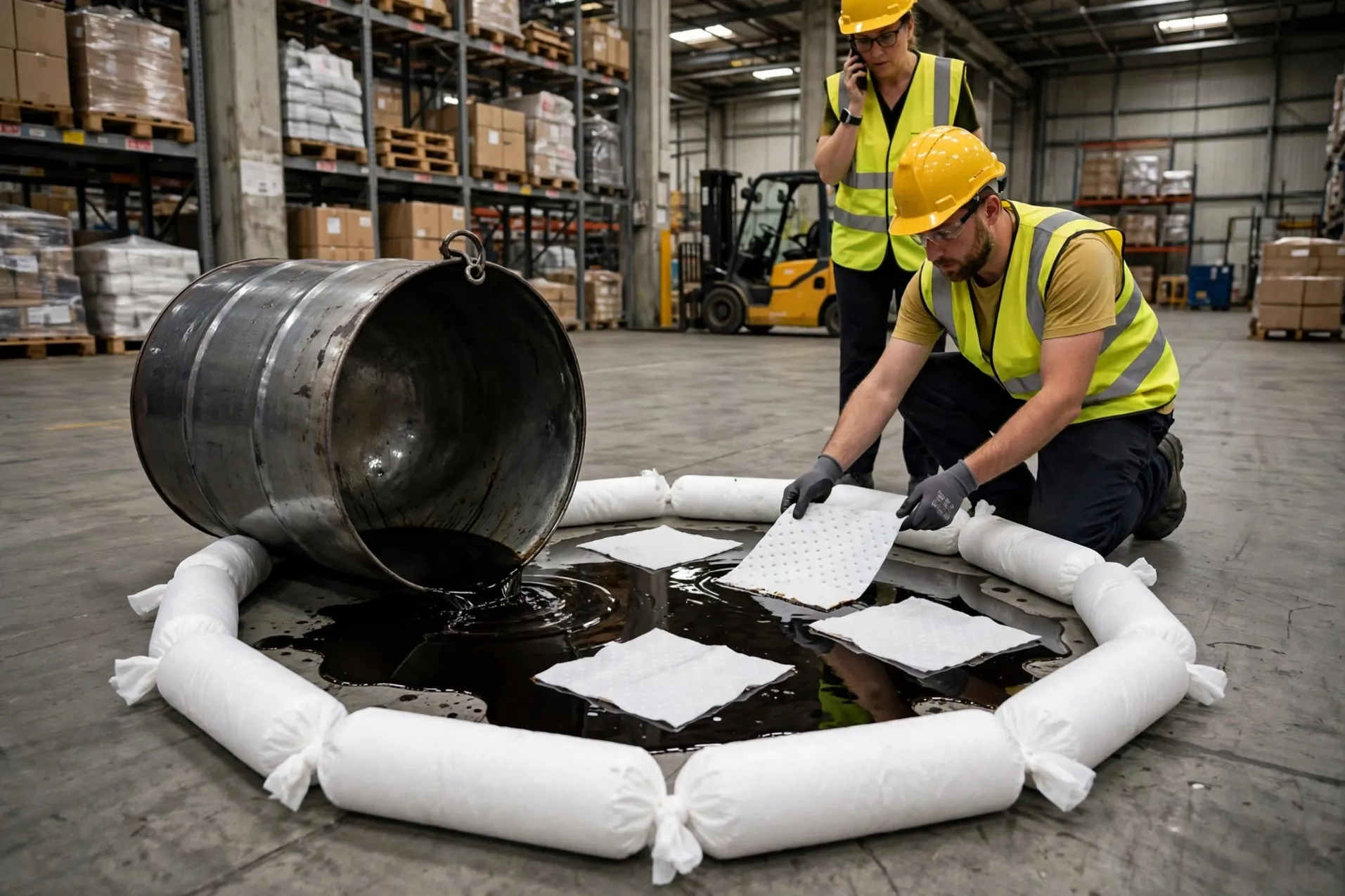
You reported the leaking drum on Monday. On Friday it is still leaking. The escalation steps that protect people, stop the spill growing, and create a record that cannot be ignored.

Most spill and injury reports start with a skipped step that saved under a minute. The shortcut list to spot, stop, and design out of the job.

The SDS app wants a login, the kiosk is in another building, and a drum is leaking. A fallback system — binder, spill cards and QR codes — that keeps safety data sheets reachable on the floor.